One Shoe On,Still Standing
On zeybek, heroism, and what happens when your shoe falls off mid-performance
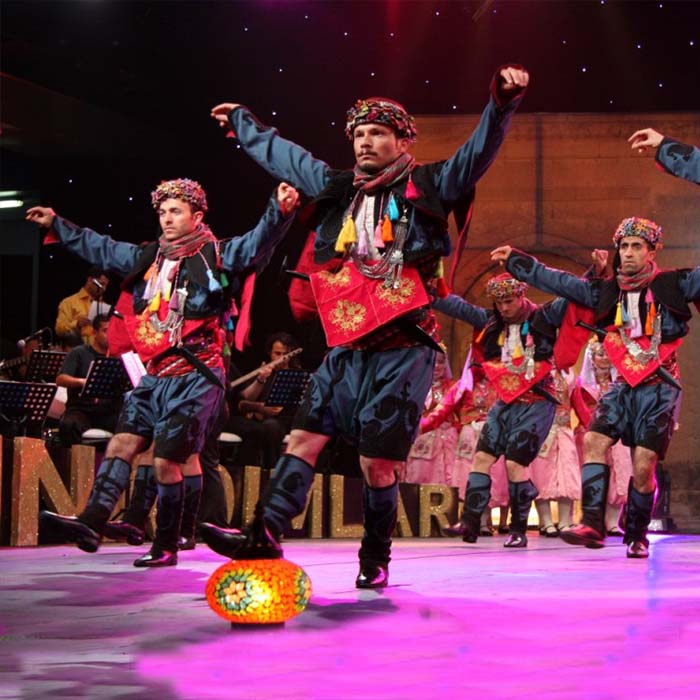
Somewhere in the second minute of the performance, my shoe came off. I kept going.
Not out of bravado — there was no time to think. The rhythm doesn’t pause for a wardrobe malfunction, and stopping would have been worse than whatever I looked like with one bare foot on the stage. So I finished the three minutes, took my bow, and walked off. It was only backstage that I noticed my heart was still racing — not from embarrassment, but from something I didn’t quite expect to feel.
What zeybek actually is
Most people describe zeybek as a folk dance, which is technically correct but misses most of it. The Zeybeks were semi-nomadic warrior groups in the Aegean, organized in bands led by figures called efe — a title that carried real weight, meaning something close to chief, or respected man. They defended villages, resisted injustice, and during the War of Independence, fought around İzmir against occupation. I live in İzmir. The city where these men held their ground is the same city where I go to school, train judo, and apparently lose shoes on stage.
The dance carries all of that history in its posture: arms wide and high, movements slow and deliberate, the whole thing built on a 9/8 rhythm that feels slightly off-balance until it suddenly doesn’t. You don’t perform zeybek casually. The stance alone takes weeks to feel natural. Wide, grounded steps. Shoulders back. Arms that move like they’re carrying something invisible but heavy.
“A zeybek who stumbles doesn’t stop. That would be more shameful than the stumble itself.”
The rehearsals
We practiced for weeks. The group coordination is harder than it looks — everyone needs to hit the same beat, hold the same posture, move as something closer to one body than several. I got the footwork wrong more times than I’d like to admit. Zeybek isn’t technically difficult in the way competitive dancing is, but it demands a specific kind of presence. You can’t be somewhere else in your head while doing it.
That focus is something I’ve run into before. Judo has the same requirement — drift for a second during randori and you’re on the floor. Zeybek punishes distraction differently, but the principle is the same: the form only works if you’re actually in it.
19 Mayıs, from the inside
I’ve watched Atatürk Commemoration Day ceremonies my whole life. You stand in a courtyard, the national anthem plays, there’s a speech, and then it’s over. I always understood what the day meant — the beginning of the independence movement, 1919, Samsun — but understanding something and feeling it are different things.
What I hadn’t fully registered before is that 19 Mayıs isn’t just a commemoration. It’s also Youth and Sports Day — a deliberate choice, made by Atatürk himself, to dedicate this date to young people. The ceremony wasn’t just about the past. It was addressed to us. We weren’t decorating a historical event; we were the point of it.
Being on the stage changed the geometry of it. The audience was watching us; we were carrying something on their behalf. And we were doing it with a stance whose origins are inseparable from exactly what that day commemorates. The Zeybeks of the Aegean fought in the same war that 19 Mayıs marks the start of. That’s not a coincidence the ceremony organizers chose — it’s the whole point.
Back to the shoe
Here’s what I keep thinking about: the instinct to just continue wasn’t mine. It belonged to the form. Zeybek is a stance before it’s a series of movements — and a stance doesn’t collapse because something goes wrong. You absorb it, adjust, keep going.
The person who performs zeybek is called an efe. Not a dancer — an efe. The word carries the whole tradition with it: the warrior bands, the resistance, the dignity. When you step onto that stage, the title comes with the role. And an efe with one shoe on is still an efe.
I didn’t feel heroic backstage. But I didn’t feel embarrassed either. I felt, weirdly, like I understood something about the dance that I hadn’t quite gotten in the rehearsals.
Sometimes you learn what something means by accident.
Kuzey Kaan Koltuk·İzmir, Türkiye·~700 words
This post was drafted with AI support and edited by the author.